Warning: Undefined array key "url" in /home/.sites/688/site2105/web/wp-content/plugins/seo-by-rank-math/includes/modules/schema/snippets/class-author.php on line 41
FraGue Moser-Kindler is a freelance artist and writer based in Salzburg/Austria. His work is about storytelling with dance as his primary means of narration.
Untold Raygun: Breaking Badly is a controversial documentary by Netflix about the Australian b-girl Rachel Gunn, known as B-Girl Raygun, and her experience around the Olympic Games 2024. Here’s my 100% biased opinion about it. Find the TL;DR at the end.
The Raygun controversy in a nutshell
Raygun was the lowest scoring contender in the b-girl category of the Paris Olympics in 2024. She did not earn a single vote from the judges. So far so good, as every competition needs someone to score lowest. In her presentation, especially the last battle, she leaned heavily into creative moves and references to her home Australia. Usually this is considered a positive thing in the breaking scene, as dancers work to develop a unique style. In her case, the missing athletic component that was displayed by the other contenders, in combination with the creative, some might call it quirky, approach led to her performance being picked up by the masses. And it became a global meme.
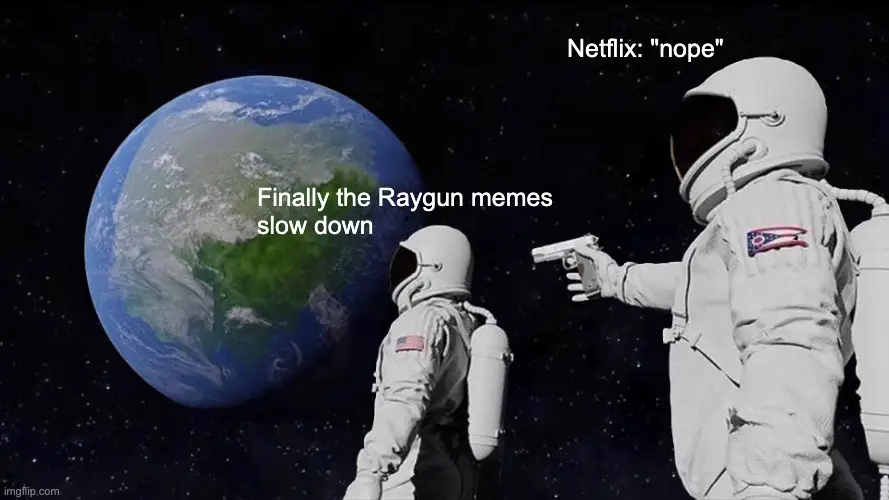
Raygun-related memes dominated social media, TV shows and online magazines around the globe. It came so far, that the real Olympic winners of this historic event did not get the shine they deserved. All medalists together did not have the same reach as the lowest-scoring contender of the whole breaking Olympics. The stories that should have traveled the world didn’t and the dance scene hated it. It came so far that there were rumors of her cheating her way into the Olympics and of her being the reason for breaking not being in the Olympics in LA 2028. Both of these have been debunked early, but most didn’t care. Feelings are hurt until this day.
The Netflix documentary and what it does well
The documentary was well-crafted, for a mainstream audience. It tells the story of Raygun’s Olympic journey. Not more, not less. It doesn’t judge breaking, the Olympic Games or the international scene reactions. It clears up the rumors and conspiracy theories, in a short segment close to the end.
Why Breaking Badly comes at the wrong time
Untold Raygun – Breaking Badly would have been great a year after Paris, or even earlier. It would have helped clear up the rumors and give everyone closure. At the time of the publication, nobody wanted to talk about it anymore. But then everything came back into focus, reigniting a debate, that nobody needed in the first place. As someone who also works in social media, I will have to read unnecessary Raygun jokes for a few more months to come.
TL;DR: Untold Raygun: Breaking Badly from Netflix is a well-crafted documentary that came at least a year too late, stirring up talks and emotions that should have been forgotten by now.
Today I will give you my 2 cents about terminology: Do you call it breaking or Breakdance? Or is it B-Boying? Read about my absolutely subjective, personal opinion.
I call the dance that I love breaking. I consider it to be the correct original term, which also makes sense as B-Boys & B-Girls initially danced to the break of the record. Therefore the term B-Boy refers to Break-Boy. I am aware that Bronx-Boy is also a common meaning, but the word Bronx-Boy relates to where one comes from and not what he dances, so I go with the other one.
B-Boying is also a thing, but I’m not too fond of it
The term “b-boying” is also accepted and common within our scene, but I don’t like and use it for multiple reasons:
It names the dance after the dancer, but the name of the dancer is, in my books, already named after the dance. You would not say “break-boying,” would you?
The word “b-boying” does not flow well about my lips when I try to say it. 🙂
“B-Boy” and “b-girl” are terms that have a gender. Using “b-boying” as the name for the dance opens up a lot of questions like: Is it “b-girling” if a female does that dance? If so, do we just call it different, or is it another thing? If it is another thing, can “b-girls” do “b-boying” and vice versa? What happens if we enter the realm of transgender and so on? For me, that whole discussion is an endless loop that I don’t want to be a part of. For me, “b-girls” and “b-boys” are “breakers” and do “breaking”.
The term breakdance is inauthentic (but…)
Breakdance is a term that was introduced by a British music promoter who could either not remember “breaking” and made up “breakdance” on the spot or just said it the wrong way. Stories differ about which of these options it originally was. But the essential point is: The term has nothing to do with the people who created our dance.
I still use the term “breakdance” in addition – especially on the website and in promotion, because that is what the uninitiated would use when searching for our dance. In that instances I consider it my obligation to teach them about it in my first class or workshop. Not using “breakdance,” would lead to people finding websites of others, who care less about our dance and the correct terminology.
Wanna check out someone else’s take on it? Watch B-Boy Crumbs talk about it below.
Tanzcafé Podcast was my audio format that lived on Spotify, Apple Music and all other common podcast platforms. As it was already on pause for a few years, I decided to officially discontinue the project as my life priorities shifted.
You can still listen to the episodes in the Tanzcafé Podcast archive.
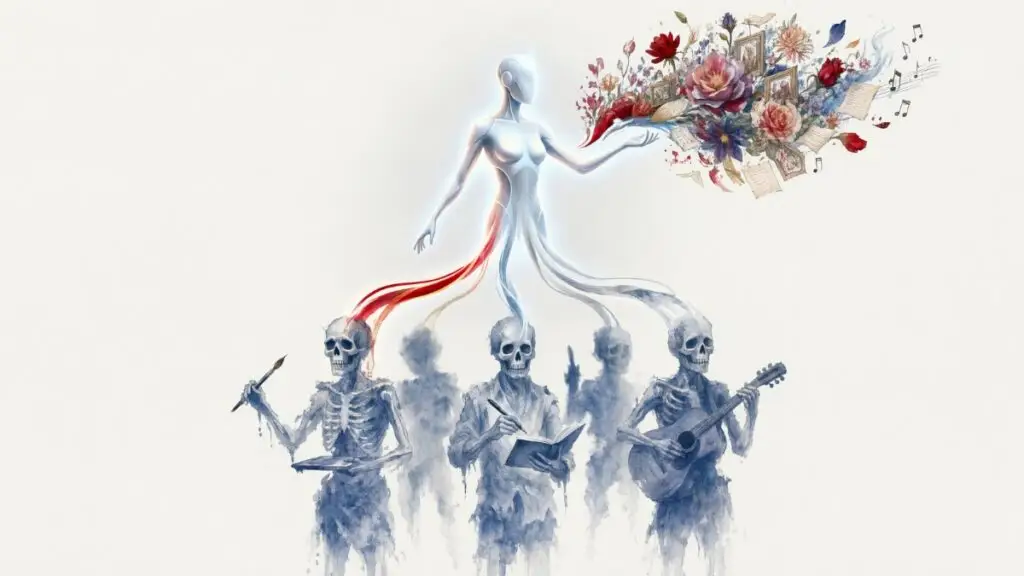
The relationship between technology and creativity has always been “dynamic”. Think about the shift from creating music with instruments and recording them versus being able to produce complete pieces only with your laptop. Now, the rise of Artificial Intelligence (AI) will be an even bigger change.
Generative AI is not a futuristic concept. It is an active collaborator and competitor within the cultural landscape. It challenges the status quo, how art has been made. And it might take the jobs of many who are “just doing their job.”
The Current State of Generative AI
The current boom in AI art is defined by rapidly evolving tools. Text-to-Image models like Midjourney and DALL-E, advanced language models such as ChatGPT or Grok, and powerful music and video generators are making creation faster then ever. These tools have drastically lowered the barrier to entry for creative output.
A user with a simple text prompt can generate complex visual concepts, musical scores, or narrative outlines in seconds. This accessibility democratizes creation, allowing users who lack traditional skills (like painting, writing or filmmaking) to execute ideas at an unprecedented speed.
AI: Creator, Co-Pilot, and Cultural Catalyst
The possibilities AI offers in culture and arts are best understood through a dual lens: creation and administration.
AI for Creation
AI could serve as a powerful partner. For an artist, it can be used for rapid prototyping, instantly generating variations of a concept, breaking through creative blocks, or pushing the boundaries of traditional media into new forms of interactive and personalized art. AI can turn a simple sketch into a detailed rendering, or translate a mood into a musical composition, focusing the human creator’s time on curation and direction rather than tedious execution.
But exactly in this advantage is also the big problem. Many who did not learn any skills in the arts are now able to participate in a game that was only for those who “earned their stripes” in thousands of hours of practice.
Connoisseurs still recognize AI art as machine-made, but the current speed of development suggests it’s only a matter of a few years, or maybe months, until it will be indistinguishable to all of us. The big bunch of people don’t see the difference now, and many more don’t care. This creates a potential imbalance in compensation for time invested.
AI for Logistics (The ‘Orga’)
AI’s role also extends far beyond the studio and into the operational core of cultural institutions. Here, it acts as a catalyst for efficiency. It can help with grant writing, with texting and illustrating concepts, ads and other sales material.
It finds holes in your workflow, acts as your accountant, does research, and can speed up processes. Especially this way of using AI for the orga in your artistic ventures gives a lot of power back to the artists, as they would now be able to do tasks themselves, which usually required a producer. It removes gatekeeping and makes producing art more affordable for the artist.
While using AI for creation is currently frowned upon, using AI to support in the orga is a thing people appreciate. But if we think things through, it is doing the same to producers and assistants as it does to artists in the other case. So, celebrating one of those two and condemning the other would be a double standard.
The Ethics of Creation: Ownership and the Authenticity Crisis
The rapid adoption of AI is accompanied by significant moral and legal concerns that must be addressed and understood by artists and institutions alike.
Ownership and Copyright
The most contentious issue involves the training data. Generative AI models are trained on massive amounts of data. Billions of copyrighted images, texts, or songs have been fed into the machine, most of the time without the explicit consent or compensation of the original human creators. This raises fundamental questions of intellectual property and is copyright infringement on a massive scale.
When an AI creates a piece, who owns it: the original artists whose work was scraped, the company that built the model, or the user who supplied the prompt? Current legal frameworks are struggling with this question. In most countries, the law gravitates towards “when something is created by AI, you can monetize it, but you don’t have a copyright.” Means everyone could steal what the AI created, because it’s nobody’s intellectual property.
An interesting story from a US Copyright Office shows how this could end up in reality. A creator got copyright on a print and digital comic because the copyright office deemed the arrangement of the comic, which was done by a human, as enough to say: “this is a new work, defined by the human’s involvement.” Important to note, only the comic in its entirety has a copyright. The single graphics that are generated by AI, can still be used by everyone and are not protected.
The laws around this will change quickly, and it will definitely be a pain in the ass to stay up to date.
The Crisis of Authenticity
The ease and speed of AI output also generate an authenticity crisis. If an AI can create a complex, technically proficient painting in under a minute, does the work still hold the same cultural value as a piece created over months of human labor, struggle, and learned skill? Many, including me, feel the essence of art lies in the effort and the human intent, which AI currently bypasses, leading to a devaluing of traditional artistic expertise.
That’s the point we discussed already. Art lovers and people who are skilled in the arts can see the difference and despise work created by AI. For good reasons. Studio Ghibli Founder Hayao Miyazaki called AI-created graphics an “Insult To Life Itself,” after millions of AI-generated images, in the signature style of his studio, showed up all over social media.
AI will take our jobs
The threat of AI taking jobs is real. Especially jobs that are basically doing the same thing over and over. Mundane intellectual labor is the first thing that will be replaced by AI. Most creative jobs will be among these. Top players within their respective fields will have no problem, as they are paid for their taste and style of doing things in a specific way.
But the average person’s work can and will be replaced by AI, as it is more consistent and will soon be cheaper. Physical jobs (everything that is not in the office) will be viable for a few more years, until robots can be mass-produced cheaply at scale.
What do we make of it?
AI is here to stay. Thinking about it differently is naive. Too many global players with too much money are currently racing towards the improvement of their AI systems and they are already integrated everywhere.
It’s time for everyone to think about how we’ll handle AI. You can ignore, you can hate it, or you can learn to dance with it. There will be bubbles that are AI-free, but the majority of life will integrate AI, whether we like it or not. The real challenge is not to reject the technology, but to define its role in your workflow and find ways to improve your art, without taking away its soul.
I don’t have good answers on how to do that, yet. I recommend to learn how the machine works, and then judging if you can use it to improve what you do. Maybe you can use it to tell a story that you couldn’t tell without it.
Rio de Janeiro. December 7, 2024. The Farmasi Arena was buzzing, packed with energy, and the perfect vibe for the Red Bull BC One World Final 2024. Brazil knows how to bring the heat; this night was no exception. The breaking scene was alive, and you could feel it in every corner of the place.
Sixteen b-boys and sixteen b-girls hit the stage, all hungry for that top spot. The crowd? Insane. Full of life, cheering like their lives depended on it. The battles were intense, the energy unmatched, and by the end of it all, two names stood out: Menno and India. They didn’t just win—they made history.
The event wasn’t just about the competition, though. It was a full-on celebration of hip-hop culture. Amjad and Magá Moura were hosting, hyping the crowd like pros. DJ Nobunaga dropped a mix of old and new beats challenging the dancers to do their best. And the judges—Jeromeskee, Narumi, Amir, Roxy, and Lil G — had the impossible job of picking winners. Every decision felt like a coin toss with how close the battles were. As usual, many disagreed with their decisions, but that is a given when the competition reaches the highest level there is.
Before the finals, there was the Red Bull BC One Camp Rio—a three-day lead-up packed with workshops, battles, and exchanges. It brought breakers from all over together, trading ideas and skills. By the time the final rolled around, the vibe was already electric.
The battles were pure madness. Right from the first clash in the b-boy category, between Hiro10 and Samuka, the crowd was in it. Toquinha, a local favorite, made waves, becoming the first Brazilian b-girl to hit the semis. Then there were international powerhouses like Yasmin from Japan and Alvin, each bringing something unique to the floor.
One of my personal highlights was the showdown of the Red Bull BC One All Stars Victor and Menno. Menno came out on top, clinching his fourth Red Bull BC One title. A new record right there, and as Menno’s style is not for everyone and hard to read, many scream it’s undeserved. I won’t judge – but I see why he won.
India went for her second title. She brought power, creativity, and flow like no one else. Seeing her and Menno celebrate together, as crew mates, was the perfect way to close the night.
While the Olympics didn’t pick up Breaking for the next edition, Breaking isn’t just alive — it’s thriving. I am looking forward to the 2025 season and to see all of ya in Tokyo.
Now that the Olympic Games are over, I perceive them as a net positive. But before we dive deeper into the matter, let’s check what people were worried about.
Disclaimer: I know it’s not called Breakdance in the scene, but I also want to reach people who don’t know that.
The risk of breakdance being part of the Olympic Games
The biggest fear in the dance scene is that breaking will become detached from its cultural roots, and the bigger part of the world will perceive it as an acrobatic form of sports instead of an art form that goes hand in hand with cultural values. There is nothing we can say to debunk this claim, and many people who perceived breaking through a classical sports lens did not understand why dancers freestyled to the music instead of preparing a fixed routine like floor gymnasts.
The advantages of breaking at Olympia
With breaking becoming an Olympic discipline, its exposure is now much bigger. The bigger exposure will create a lot of opportunities for dancers to earn more money and educate the public (if they choose to do so). The older generation will be able to judge and share their view about dance and culture. The young generation will have an additional platform to test their skills. This attention will lead to even more brands and sponsors come on-board for breaking, which opens up opportunities for people to make a living from breaking.
Will breaking change because of its inclusion in the Olympic Games?
Yes and No. We will see an increased focus on the athletic aspects of the dance. The young generation is already pushing the boundaries of what can be done. Olympia will only speed up this development, but it is not its sole reason. Breaking has always been a phenomenon living in the twilight between art and sports, and the aspect that caught people’s initial attention was the acrobatics. This will not change.
The jams, battles and gatherings where we celebrate the culture will not go away just because there is an additional platform. Underground events that are true to the culture will still be around, and they are not competing with sports competitions. It will be in the power and responsibility of all the b-girls and b-boys participating in significant sports events, like Olympia, to represent our culture appropriately. This includes competitors, judges, consultants, and even visitors familiar with the culture.
What happened with Breaking in the Olympic Games 2024?
First off, we had some amazing battles with more eyeballs than we are used to. B-Girl Ami, from Japan, won the gold medal with Nicka, from Lithuania, and 671, from China, coming in second and third. Phil Wizard, from Canada, took the win in the b-boy category, with Dany Dan, from France, and Victor, from the USA, taking silver and bronze.
The dancers enjoyed the music provided by DJs Fleg and Plash and gave their best. There was some controversy about B-Girl Raygun from Australia, who presented a more originality-based approach to the dance, which was not well-perceived by the uninitiated part of the audience. To be honest, it was to be expected that something like this might happen. Raygun did an amazing job, but one can’t please everyone.
I’d like to paraphrase Theodore Rosevelt here and leave it at that.
It is not the critic who counts; not the one who points out how the strong one stumbles, or where the doer of deeds could have done them better. The credit belongs to the one who is actually in the arena.
Theodore Rosevelt
The battles were great, the dancers performed like crazy and some unsung heroes from the scene stepped up to take care of the many tasks needed to make the event happen.
Sometimes people argue about stupid shit. A prime example for this is the discussion of freestyle vs choreography in hip hop dance. What this discussion misses is that freestyle and choreography are the same things but under different conditions. Both are about creating our dance; one is spontaneous, and the other is a slow and very reflective process.
Before we jump into the topic itself, for the sake of this article, I refer to freestyle as “improvisation within the boundaries of a dance style” and not “do whatever you want”.
Here are my two cents on why this discussion does not go anywhere and why you should be able to freestyle and create choreography. To clarify my point, I will use my favourite metaphor to compare dance to a language.
Our moves in any given style are comparable to words in a language and, therefore form our vocabulary. Our grammar is the flow of the style and how we connect our moves to form our dance being the text that has a meaning that is created by the combination of words. And finally in hip hop and it’s related styles, music is the topic we talk about.
The difference between dancing freestyle or a set choreography is like the difference of talking free versus reciting a poem. Both are fine at the correct time. You can make a serious impact by having the right poem at hand for the right occasion, but bringing a poem about the beauty of x-mas in a discussion about the ecologic crisis is just stupid.
At the same time, you miss out on a big part of the beauty of choreography if you don’t understand how the moves connect. This is the same as learning a poem in a foreign language when you can tell it to people but don’t know what it means.
And you can’t say you are a master of a language/dance if you can’t create a speech/choreography to a given topic.
This means there is no “which is better/superior/whatever”. You need to understand both to master your craft. There is nothing wrong in specialising in one or the other if you want. But if you do so, don’t divide what’s one in an artificial discussion and openly admit that you don’t care enough to work to learn both.
Join me on a rhythmic journey through the vibrant world of hip hop dance. This article is tailored to serve as your compass in navigating hip-hop’s pulsating beats and intricate moves, allowing you to immerse yourself fully in its dynamic essence. I will also give practical advice on how to learn, practice, and master it. Gear up to uncover the secrets of developing your unique style and expressing your individuality through dance. But first, let’s check out…
What is hip hop dance?
Hip-hop dance is a vibrant form of expression and kinetic poetry born from hip-hop culture’s energetic and resilient spirit. This culture, originating from the 1970s South Bronx, is a rich tapestry woven with various elements, each contributing to its diverse and dynamic identity. While breaking was the original dance form of hip hop culture, hip-hop dance came in later and can be considered the younger sibling of breaking. These dance forms are one of the four foundational elements of hip-hop culture, intertwined with rap music, graffiti art, and DJing. Working in harmony, these elements created a revolutionary artistic movement, echoing the voices, stories, and experiences of marginalized communities, thus providing a platform for self-expression, communication, and identity.
At its core, hip-hop dance is a physical articulation of hip-hop music’s rhythmic and lyrical components. Its improvisational nature, unique movements, and powerful expressions of individuality and freedom characterise it. In its pure form, it is a freestyle dance. The original moves of hip hop are based on social and party dances that people did together on jams, in clubs or simply in the streets. Often these moves were inspired by cartoons (e.g. the Bart Simpson, Roger Rabbit), fashion (e.g. the Gucci, Reebok or Fila) or movie stars (e.g. the Steve Martin).
Hip-hop dance is not just about the moves; it’s about the attitude, the swag, and often about the story it tells. It’s an eclectic blend of various dance forms and cultures, allowing for various movements and expressions. With its global reach and universal appeal, it has transcended boundaries, enabling individuals from diverse backgrounds to connect and communicate through the universal language of dance. It has transformed streets into stages, providing a canvas for dancers to paint their stories, struggles, and triumphs, fostering unity and mutual respect among different communities.
How to learn hip-hop dance?
Learning hip-hop dance offers unparalleled flexibility, allowing enthusiasts to adapt and tailor their learning experiences to suit their preferences, lifestyles, and learning paces. Whether you prefer the structured environment of a dance studio or the comfort and convenience of your living room, the journey of mastering hip-hop dance is accessible to all. With many resources available online and offline, anyone can immerse themselves in the rhythmic symphony of hip-hop.
Find yourself a teacher or mentor
The best way to learn hip hop dance is with capable teachers. No matter if that is in a studio or within a crew. Getting input from a trusted source and feedback on your progress also guarantees fast progress. Certainly, having a knowledgeable mentor provides a structured learning environment and fosters a space for constructive critique, honing your skills more effectively. Furthermore, a teacher’s experience and insights can help navigate the intricacies of hip-hop dance, ensuring a deeper, more nuanced understanding of each movement and its cultural context and enriching your overall dance experience.
Learning to dance hip hop online
Learning hip-hop dance at home, leveraging the vast resources available on the internet, is a viable option for those who don’t have good teachers at hand. The online world is brimming with tutorials, workshops, and lessons that can guide you step by step on your journey through hip-hop dance. This method not only allows for flexible scheduling, catering to your pace and routine but also offers many styles and techniques to choose from, diversifying your learning experience. However, it demands discipline, self-motivation, and a discerning eye to select quality content, ensuring that the essence and authenticity of the dance form are preserved and respected.
There are full-fledged online courses out there, or you can pick and match tutorials from various online sources – mostly YouTube.
Take workshops
Opting to travel to various workshops led by esteemed teachers offers a balanced approach to learning the dance, allowing you to curate a personalized curriculum that reflects your interests and needs. This method combines structured, quality learning from reputable sources with the flexibility to choose specific styles, techniques, and teachers, enriching your repertoire with diverse insights and experiences. This tailored approach enables a deeper exploration of the dance form, allowing for a more nuanced understanding of its elements. It also allows connecting with like-minded individuals and communities, fostering a sense of belonging and shared passion within the dance community.
These workshops can always be an addition, even if you choose to learn in a studio or from online sources. Most big dance events offer workshops with their headline guests, so be sure to have your eyes open on those.
What to focus on when learning?
In my personal opinion, there are three parts you should focus on while learning hip hop dance. I will compare dance with language to make my point.
Moves and Steps are your Vocabulary
Consider each move and step as the vocabulary, the building blocks of your dance language. These elements are the expressions and words that you can use. Just as an extensive vocabulary can make conversations rich and expressive, learning a diverse range of moves and steps allows you to articulate your dance more vividly and precisely.
Grooves and Concepts are your Grammer
Next in line are grooves and concepts, the grammar of your dance language. They are the rules and structures that organize your vocabulary into coherent, meaningful “sentences”. Mastering the grammar of hip hop – understanding the foundational grooves and internalizing various dance concepts – enables you to create fluid, logical, and impactful dance sequences, that look like hip hop and something else. Just as grammar gives language its rhythm and flow, grooves and concepts lend your movements a natural, rhythmic coherence, allowing your dance to speak eloquently and fluidly.
Music is your topic
Lastly, the music is the topic of your conversation, the theme around which your dance language revolves. The context gives meaning to your vocabulary and grammar, shaping the mood, tone, and content of your dance narrative. An intimate understanding of the music allows your dance expressions to be in harmony with the song’s rhythm, melody, and emotion, making your dance conversation engaging, emotive, and in sync with the musical discourse.
So by understanding these three components (moves, grooves/concepts and the music) you will soon be able to speak freely in the language of hip hop.
What is the hip hop dance experience?
You wanna know what to expect – about the hip hop dance experience? Let me give you my two cents. You can anticipate a vibrant and welcoming experience, full of energy, passion, and creativity. On the other hand, this culture has its black sheep like every other scene. Meet the right people and everything is “Peace, Love, Unity and Having Fun” – the credo of hip hop culture. Meet the wrong ones and you will meet narrow-mindedness and bigotry. The hip hop scene is a smaller mirror of our complex society, you will find everything in there, that you encounter somewhere else. We just have better music and the better moves. 🥳
Joining the hip-hop community opens up a world of opportunities to connect with like-minded individuals, passionate about dance, music, and art. This community is a tapestry of people from different backgrounds, united by a common love for hip-hop, offering a supportive environment to grow, learn, and create. The camaraderie within this community is palpable, with experienced dancers and newcomers alike sharing knowledge, encouraging each other, and pushing the boundaries of what hip-hop dance can be. It’s a space where creativity flourishes, friendships are forged, and where each dancer contributes to the ever-evolving tapestry of hip-hop dance.
Learning the dance itself is not just about acquiring new moves; it’s about immersing yourself into the possibilities of expression within your physical and mental capabilities. It’s challenging and rewarding at the same time. It teaches you a lot about yourself if you let it and are open to reflect and think about what it does to you. Learning hip-hop provides an avenue to explore and understand the multifaceted world of hip-hop, music and yourself. It’s a trip you should at least take once.
In case you are looking for reasons to get into Breakdance aka Breaking, you might want to check out a story I wrote for Red Bull: 10 Reasons why you should start to break.
Online Resources to help you learn
The following links are online classes and resources that I can recommend wholeheartedly. I either know the classes from first-hand experience or personally know the people who offer them.
Hip Hop Moves List: this is a collection of steps I know. It’s free and will be free forever. When I have time, or somebody sponsors a coffee for an extra night shift, I try to add more to the list or find tutorials to add.
Beyond The Moves: The BTM platform has a lot of of different training programmes for all levels.
Steezy: Steezy.co is a mainstream-focused platform for dance classes. If you want to dig hardcore in your own style, go with BTM, but if you like choreography Steezy might be the place for you.
Books that can help you learn
Dance Smart: I wrote this book to guide people on their journey with dance concepts, which can be used to create your freestyle dances or choreography. It might be too heavy for total beginners, but when you have a few moves down already, this will help you find your own way of creating dance.
Performance Skills: Another one of my own, for those who are afraid of dancing in front of people or those who want to improve their stage presence.
Oxford Handbook of Hip Hop Dance Studies: This one is a compendium of research around all topics hip hop dance. If you like to explore stuff from a scientific perspective, this books is for you.
The book links above are affiliate links and will take you to Amazon.
Freestyle dance is an art in itself. When we watch someone dance, more often than not, it’s the raw, unscripted moments that leave us awestruck. That’s the beauty of freestyle dance – it’s an unfiltered expression, a dance of the soul, unique to the dancer. It’s like a painter’s brushstroke, distinct and telling a story only they know. While choreographed sequences have their place and charm, freestyle is where the spirit runs wild, unrestrained by sequences or patterns. How does one channel this freedom without getting lost in it? Over the years, amidst my various dance endeavours, I’ve found that while freestyling can be spontaneous, it often thrives on a subtle structure. I’ve played with countless methods, but three have consistently resonated with me and enhanced my dance: Rhythm, Concept, and Storytelling. And to answer the question “How to freestyle in dance?”, from my perspective – we will journey through each of them.
1. Rhythm – Carving Your Own Dance Path Through Music
Music and dance share a symbiotic relationship. However, while many listen to music, few truly hear it. When freestyling, dissecting the track, understanding its highs and lows, and allowing it to guide your movement is essential, if you want to move away from generic repetitions of the same moves, you always do. True mastery lies not in merely following the rhythm but in showcasing your unique interpretation of it. It’s about how you ride the wave, emphasize certain beats, and sometimes choose to defy them. Your dance becomes a visual representation of the song, punctuated with your individual flair.
To do this, you need to practise active listening. Listen to the music carefully, trying to hear the different instruments separately. Most music we dance to has many layers, and it is impossible to dance to all instruments simultaneously. So the art of this freestyle approach is to find your own way through all the instruments. When you decide to switch from one instrument to the next or how you show multiple layers at the same time becomes your signature and it will be different from everybody else.
This way of freestyling benefits a lot from having a good understanding of isolations and polyrhythms so you can add layers of details to the basic moves you use. An amazing example of how far this journey of showing multiple layers can go is the dancer Brian “Footwork” Green. Check out the clip below and pay attention how he showcases different parts of the music.
2. Concept – The Guiding Star of Your Freestyle
Dance can be abstract; sometimes, having a guiding concept can shape your freestyle into a coherent masterpiece. This is akin to giving yourself a delightful challenge or a puzzle to solve. Whether it’s a task like ‘add a pop on every snare drum’ or an abstract idea like ‘water flowing through obstacles’, a concept provides a thematic consistency. It keeps you grounded, gives direction to your movements, and offers endless possibilities to explore within its framework.
If that sounds too abstract to understand, have a look at Paradox exploring a concept called “Tracing,” where you either trace the shape of your body or your movement with your hands or other body parts.
Concepts can be as easy as “movements alternate between left and right” or as complex as “separate your body in three areas and change the instruments you dance to every 3 bars.” The creativity dancers display while coming up with their own concepts is crazy. I wrote a few articles about dance concepts here on the blog and published the book Dance Smart, which introduces 36 basic concepts.
3. Storytelling – Narrating Tales Through Movement
Every dance tells a story. Sometimes it’s vivid, with clear characters and narratives, other times, it’s abstract, leaving much to the imagination. When you approach freestyle with the intent to tell a story, your dance becomes a dynamic play. It could be a story of triumph, a portrayal of a day in your life, or even the narrative of the song you’re dancing to. Each move becomes purposeful, each transition is a plot twist, and your entire dance becomes a journey that the audience embarks upon with you.
With storytelling, there are two different paths you can follow. The easier one is, “How would you portray the story with dance.” Your steps, gestures and facial expressions are a danced version of the things happening in your story. Kinda like impro dance theatre. The second approach would be “how would the dance of a person experiencing the story look like.” Here you would immerse yourself in the emotional world of the story, but don’t mimic the story with your moves. Instead, you would interpret the dance moves with the emotional load from the story. Mostly people travel the spectrum between those two during their storytelling freestyle.
You can watch some great examples in the clip from Freestyle Roulette presented by Galen Hooks below.
Freestyle dance might seem like a world of chaos from afar, but once you’re in it, with the right tools and mindset, it becomes a universe waiting to be explored, one move at a time.
Hey there, fellow groove enthusiasts. Diving into the world of dance choreography? It’s a wild ride. Imagine painting, but instead of a canvas, you’ve got beats; instead of brushes, you’ve got limbs flying around. Choreography is that fascinating bridge between the heart’s emotion and the body’s motion. It’s where our stories, feelings, and sometimes our quirks get to dance in the spotlight. Just like a captivating story needs a solid plot, a dance piece needs thoughtful choreography to resonate. So, whether you’re trying to express the euphoria of love or the chaos of the Monday blues, let’s embark on this journey of turning beats into steps and melodies into movements. Ready to jump in?
The Art and Science Behind Choreography
Ever wonder what makes certain dance sequences stick in your mind, while others fade away like last summer’s tracks? It ain’t just about cool moves or wicked beats. It’s a delicate dance – pun intended – between art and science. Let’s break it down, shall we?
Artistry in Motion: At its core, dance is a form of expression, a canvas where emotions play out in physical form. Choreography is where we paint our stories, drawing from personal experiences, inspirations, or even dreams we had last night. It’s subjective, fluid, and deeply personal. The artistry is the ability to convey a message, evoke a feeling, or simply create something visually delightful. It’s the nuances, the pauses, the intentional imperfections. Like how a single tear can sometimes say more than a monologue, it could be that lingering hand or the way a head turns in dance.
Science of Structured Movement: Now, here’s the clincher. You can’t just throw a bunch of moves together and call it a day. There’s a method to this melodic madness. Choreography leans on understanding body mechanics, spatial awareness, and musicality. How do you transition seamlessly from a leap to a roll? How do you ensure that dancers aren’t colliding or throwing off the visual symmetry in a group performance? That’s where the science bit kicks in. Structuring a sequence requires a deep understanding of counts, rhythms, and formations. It’s also about ensuring that the movements align with the dancer’s capabilities and the chosen music’s tempo and tone.
Melding these two – the raw emotion of the art and the precise calculation of the science – is where the magic happens. It’s like composing music, but you’ve got moves instead of notes. Or like crafting a delicious recipe, where each step, each ingredient, matters. Next time you watch a dance and feel something, know there’s both heart and a whole lot of thought that went into that. Let’s give a little nod to the choreographers, the unsung heroes who blend passion with precision, making our souls groove and our hearts move.
Dance is the hidden language of the soul of the body.
Martha Graham
Understanding the Purpose: Choreograph the Dance to be more Than Just Movement
Ever caught yourself swaying to a melancholic tune or pumping your fist to a rebellious rock song? Music, at its core, evokes emotion, and dance? Well, dance amplifies it. But before one jumps into crafting a sequence of steps, it’s paramount to dig deeper and understand the ‘why’ behind the dance. The goal you are trying to reach dictates how you approach the creation process.
Message Over Movement: While an array of complicated moves and flips might garner applause in battles and dance competitions, the message behind the dance truly resonates with an audience in theatres. Is it a story of love lost, a call to societal change, or perhaps a celebration of joy? Maybe it’s a narrative about battling inner demons or an ode to nature. Before delving into steps and sequences, a choreographer needs to be crystal clear about the message they want to convey. Think of it as the plot to your dance novel.
Adapting to the Platform: The intent behind a choreographed piece can also be dictated by where it’s performed. A competitive stage might demand technical prowess, while a community outreach program might emphasize connection and relatability. A theatrical production might require intricate storytelling, whereas a flash mob in a public space might aim for shock and awe. Knowing your platform helps in tailoring your dance to its audience.
Dancing for the Dancer: Lastly, understanding purpose also pertains to who is dancing. A solo piece can dive deep into personal emotions, while a group choreography might be about collective experiences or contrasting viewpoints. Moreover, choreographing for a novice demands different considerations than for a seasoned dancer. The purpose should align with the dancer’s capabilities, experiences, and, importantly, their own expressive desires.
In essence, choreography isn’t just about crafting a dance; it’s about crafting an experience, a story. And every great story starts with a purpose. So, as you embark on your choreographic journey, take a pause and ask – what story do I want to tell?
Choosing Your Music for the Choreography: The Heartbeat of Dance
Imagine setting a fierce battle scene to a lullaby, or perhaps a romantic pas de deux to aggressive metal – seems off, right? That’s because music is the backbone, the pulse, the heartbeat of a choreographed piece. Selecting the right track can make or break your dance. So, how do we go about it?
Resonate with the Rhythm: Before anything else, the music must resonate with you as a choreographer. Can you visualize movements, transitions, and emotions while listening? If a track doesn’t stir something within you, chances are, it won’t stir your audience either. Trust your instincts and choose a song that speaks to your soul.
Understand the Dynamics: Music isn’t a monolithic entity; it has highs, lows, crescendos, and pauses. Mapping these dynamics aids in understanding where the dance can have explosive movements, gentle flows, dramatic pauses, or intricate footwork. The dynamics of a song guide the dynamics of the dance.
Lyrics Matter (Sometimes): If you’re choreographing to a song with words, pay heed to the lyrics. If they are not easy to understand when listening, grab them from the internet. They can provide an additional layer of narrative to your dance. You can either follow the rhythm of the lyric, the story they are telling or only emphasize some single words. A turn on the word “spin”, a jump on “fly”, or a collapse on “fall” – these are simple examples, but the lyrics can provide a roadmap for your movements, enhancing the connection between the dance and the music.
Don’t Shy from Experimentation: Traditional ballet pieces don’t always need classical tunes. Hip-Hop can be danced to violin strings. The world of dance is ripe with examples where choreographers went against the grain, merging unexpected dance styles with contrasting music, leading to some of the most memorable performances.
Choosing music isn’t just about finding a catchy tune; it’s about finding the right partner for your dance story. When both dance and music are in harmony, they create an unspoken language that has the power to captivate, communicate, and connect.
Three Approaches to Crafting Your Dance Choreography
In the realm of dance, there isn’t a one-size-fits-all recipe to choreographing a piece. Just as artists use different brush strokes, choreographers have varied methods to carve their vision. Here are the ones I used.
1. Story First: Narrating with Movement
Dive into the world of your music and weave a tale. Before a single step is mapped, the narrative unfolds in the choreographer’s mind. The music becomes the backdrop, setting the scene. As the tale progresses, sections of the song become chapters of the story, and dance steps breathe life into the characters and their journey. This immersive method pulls the audience deep into the narrative, making them live every twist and turn as the music feels like the perfect soundtrack.
To pull this off, you listen to the music and decide on which part of the song, which part of the story unfolds. So you already know what happens when on the track. After that, it is a matter of finding the right steps to fill the void. Knowing the music and the story, that is rarely a problem.
Check out an example in the clip below.
2. Concept First: Abstract Artistry in Choreography
Dance doesn’t always have to tell a straightforward tale. Sometimes it’s an idea, an emotion, or a theme that dictates the movement. With a concept-first approach, the essence of the dance is abstract. Choreographers might start with a vague notion or a feeling they wish to convey. From there, they mold and shape their movements, creating a piece that evokes emotion without a linear storyline. Once the core concept is established, narrative elements might be sprinkled in, adding layers of depth to the abstract masterpiece.
Check out an example of a concept piece that only works with hand shapes below.
I already wrote a lot about concepts in dance. If you are unfamiliar with that term, check out dance concepts here on my blog. If you really dig that stuff, you can grab a copy of my book Dance Smart, which is dedicated to dance concepts.
3. Music First: Moving to the Melody
For some, it’s all about the beats, rhythms, and harmonies. With the music-first method, choreographers become devout followers of the song’s intricacies. Every beat dictates a step, every pause an emotion, and every crescendo a climax. It’s a visceral approach where the music and the movement become one. Rather than imposing a preconceived story or concept, the choreographer allows the music to guide the journey, creating an organic flow that’s harmonious and intuitive.
Check out the clip below to how that could look like. In this clip the dancers work really nice with the lyrics of the song.
This often comes in the form of repeating freestyles to the same track over and over, finding movement that you like and keeping that part, then moving from there. You repeat this process until you are done. Stepping away for a while might be necessary if you hit a block.
Each approach has its charm and challenges. The key is to find what resonates with you as a choreographer. For me, it’s a blend of all three; with an emphasis on story. It’s about capturing the essence of what you wish to convey and translating it into a dance that leaves an indelible mark on the audience.
Staying Inspired and Navigating Creative Blockades while Choreographing a Dance
Much like any other art form, dance has peaks and troughs. There are moments when inspiration flows like a river and others when the well seems to run dry. No matter how seasoned, every choreographer has faced the daunting wall of a creative blockade. Here’s the secret – it’s not about avoiding these blocks but learning to dance around them.
Stay Curious: Just as a dancer always learns, a choreographer should be forever curious. Explore other art forms, from painting to poetry, and find connections back to dance. A scene from a movie, a verse from a song, or even the rhythm of raindrops can spark an idea.
Break the Routine: Change your environment if you’re always choreographing in the same studio or space. Sometimes, a new setting can offer a fresh perspective. Let different surroundings influence your movements, whether it’s a park, a beach, or even your living room.
Collaborate: Dance is a communal art form. Engage with other dancers, choreographers, or artists from different disciplines. A fresh pair of eyes or a new perspective can break down walls you didn’t even know existed.
Embrace the Block: It may sound counterintuitive, but sometimes the best way out is through. Instead of fighting the blockade, use it. Make a piece about feeling stuck, trapped, or restrained. You’d be surprised how therapeutic and liberating this can be.
Remember, every artist has their moments of doubt and dry spells. The passion, persistence, and the will to push through separate the good from the great. Embrace the journey, with its highs and lows, and let it fuel your dance narrative.