For the past few months I supported my wife for the release of her debut album “The Fragrance of Memories.” Finally, it is available to stream and purchase.
If you want to support follow Szintra on Spotify or grab a copy on Bandcamp.
This is my general blog category.
Most entries, that are not part of the documentaion of my work, are going here. Therefore you find a collection of different topics. You can further refine the shown topics with the use of tags.
#blog
For the past few months I supported my wife for the release of her debut album “The Fragrance of Memories.” Finally, it is available to stream and purchase.
If you want to support follow Szintra on Spotify or grab a copy on Bandcamp.
The filter bubble is a term that describes the phenomenon of search engines, social media platforms, and online advertising systems showing you only the content that you are supposedly interested in while withholding the rest.
While the internet coined that term, the phenomenon itself is not new. The same happens to a lesser degree when you are primarily moving in only one social circle or one cultural scene. The topics that people talk about, as well as trends and political opinions, are (most of the time) consistent as long as you move within the same crowd.
This bubble leads to unintended tunnel-vision as information that is not part of our bubble goes unnoticed. Depending on your current situation, this can be good or bad.
If you want to learn a new skill or craft from one specific culture or subculture, immersing yourself into it is the best thing to do. Unwavering focus without any distractions will let you progress faster on your quest to learn a specific skill. That is the case if you want to learn hip hop dance or breaking. Dive into the scene, find friends, teachers, or mentors there, and become the greatest dancer you can be.
If you want to create something or come up with original or creative ideas, it is better to avoid bubbleism (I know that is not a word). You want to be on the edges of multiple bubbles. You have more influences and also access to more information. This is the case if you’re going to turn your dance passion into a sustainable dance business, beyond hip hop dance moves. You will be better off having access to the body of thought from the hip hop scene, entrepreneurs and community builders.
Know where you are on your journey and which bubbles you need to reach your destination.
We live in a time of change, and the ability to adapt will make the difference between growth or suffering. This goes for your dance business and your personal development. To adapt, we need to be able to learn new skills when the need for them arises. Learning new skills is a skill in itself, and a lot of people call it a meta-skill.
The illiterate of the 21st century will not be those who cannot read and write, but those who cannot learn, unlearn, and relearn.
Alvin Toffler
Learning something new or unlearn things that don’t benefit or even hinder us will be more important than adding more steps to your hip hop move list or more tracks to your playlist.
Learning something new is also a skill that we need to practice. So make it a habit to learn something or do something for the first time often. This way, your learning muscles stay healthy, and you can move fast when you need them.
There are also a lot of things that we apply or think to know that are, in reality, detrimental to our progress. Examples would be racism (or any other form of discrimination) or the simple belief that you are not good enough for whatever it is you want to do.
Asking the right questions, identifying those things that hinder us, and unlearn them or replace them with a mindset that serves us better is a hard task that requires, once more, brutal honesty with ourselves. But putting in the effort pays off and being honest with yourself, makes life much easier.
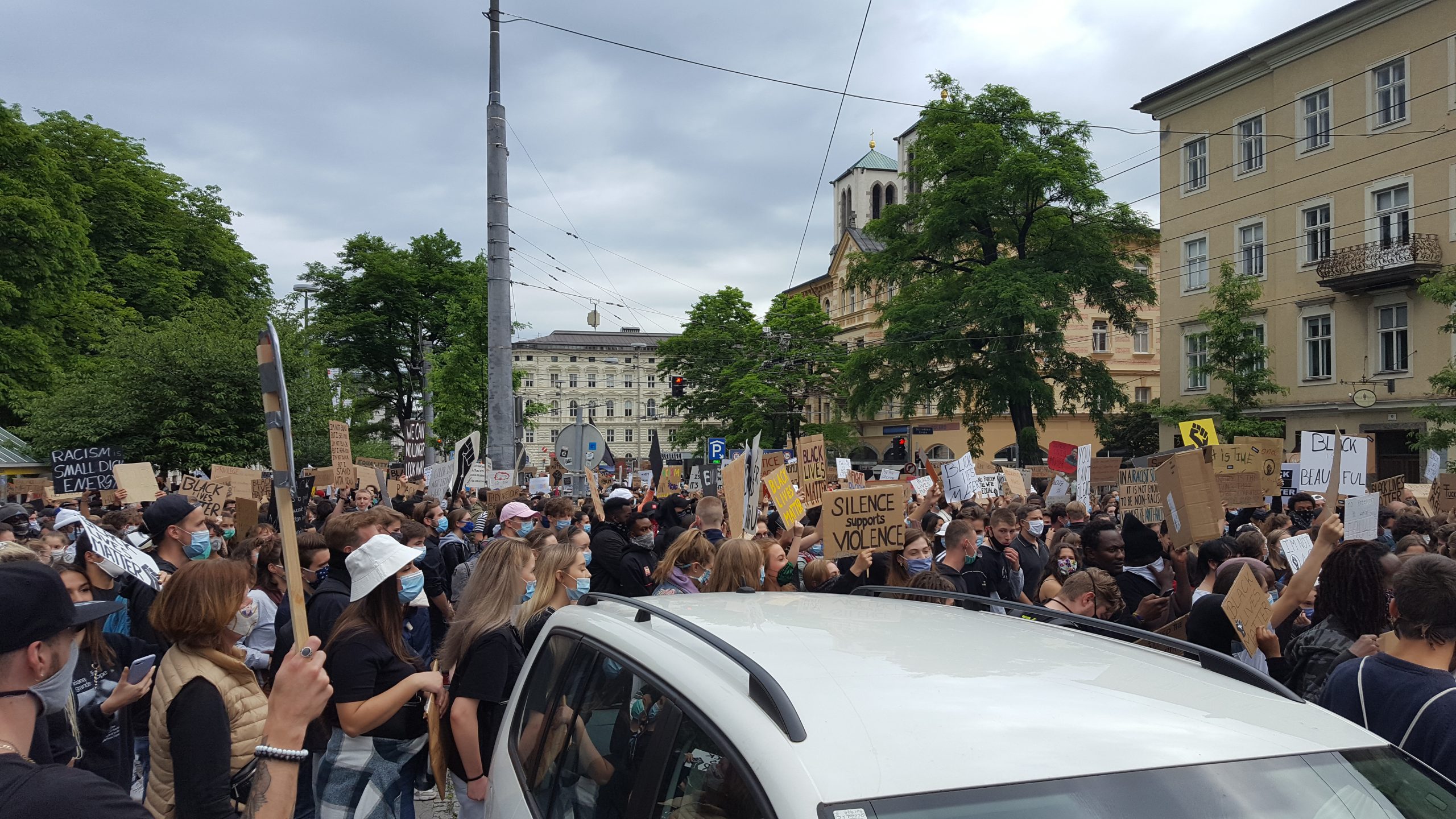
Racism is a global issue. A part of the world, especially the younger generation that grows up with black culture, understands that. But despite all the outrage and screams for justice, most folks fail to answer the question, “how can I help?”
The reality is, there are many ways we can help that depend on your situation, where you live, what you do, and in which community you are spending your time. For example, donating, signing petitions, send emails to authorities, supporting protests, find an NGO to work with, share news to your circles that would otherwise go unheard, and much more. When you flex your google skills a little, you will come up with more than enough things that you can do that are tailored specifically to you.
I will not talk about these specific things. Instead, I want to suggest one thing every human can do to purge racism. I did not come up with this myself, and I did not think I will write about the topic in the first place. I tried to process an overwhelming flood of information from people much more knowledgeable and most likely smarter than me to find the right way to help that works for me. Below I will share how I think that we can really combat racism.
We must embrace the mindset that “racism ends with me.” Racism and oppression of people based on race burnt themselves into humanity over generations. Sadly, we can’t change the past and are not responsible for what our ancestors did. But every single one of us is responsible for what happens now and in the future. Doing that work is not an option. It is our responsibility.
The beauty of “racism ends with me” is that the theory is simple to understand. We need to do everything we can in our daily lives to stop racism when we experience it. If we all do this, racism would be gone in one generation. That is, most likely, not going to happen. But the more people join the cause, the faster it will.
Sounds simple enough to me, but it will be incredibly hard to pull off. It will hurt to see where our own minds are corrupted by the plague that is racism. It will be uncomfortable to raise our voices against idiots who still think it is OK to treat our black brothers and sisters like second class. And it will be exhausting to do it all the time. But that does not matter because it is the right thing to do, and all our discomfort is nothing compared to the suffering of generations of black people.
“White feelings should never be held in higher regard than black lives.”
Rachel Elizabeth Cargle
I want my daughter to tell her children that grandpa was “one of the guys who made a difference” instead of “yes, they knew but chose to remain silent.”
What about you?
#blacklivesmatter
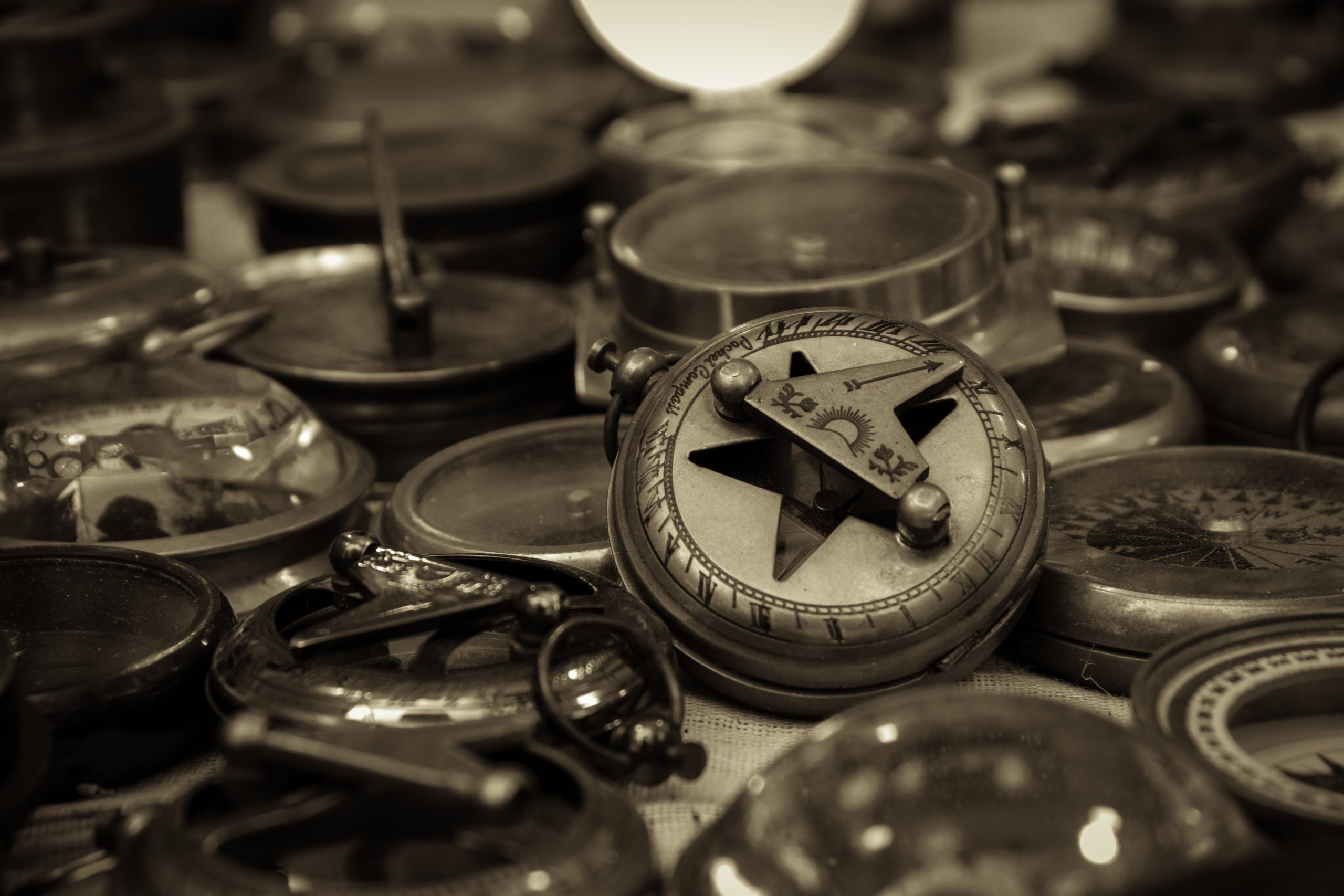
To finish any given project and make meaningful progress, we apply two different modes of operation. I like metaphors and call them clockmaker mode and clockwork mode. It would also be perfectly fine to label them smart mode and dumb mode or planning mode and execution mode.
The point is that both modes alone are worthless for real progress. Only a combination of both gets essential stuff done.
The clockmaker mode is about defining goals, asking the right questions, reflecting about your course of action, evaluating outcomes, and, most important, laying out the plan for clockwork mode.
Clockmaker mode is about navigation. It’s about finding out the place where you want to go with whatever you do. Its purpose is to set a course for your destination.
Clockmaker mode needs time, honesty, and free thought.
Clockwork mode means to take all the necessary steps to get you where you want to be. It is about ticking all the boxes on your to-do list and making all the tiny steps that will lead you to your goal.
In clockwork mode, it’s not about navigation as you already know your course. It is about traveling the distance.
Clockwork mode needs discipline and the will to push through uncomfortable times because you know where it leads you.
It’s always better to be part of a clockwork that you created or at least helped to create, so you know where you are heading.
Smart mode and dumb mode need each other. The one provides the plan, and the other provides the action to make it happen.
Each one of them alone makes your whole endeavor and life miserable. People who are in smart mode all the time only talk without ever doing something. The others who are in a permanent dumb mode, work all the time without the feeling of accomplishment and are very likely to burn out.
It would be best if you had a healthy balance of planning and execution to go where you want to go. Define a goal, make a plan, work towards it, check if you are heading in the right direction, and adjust course if necessary.
If you create a dance piece, clockmaker mode is answering the questions of what the piece is about and why you want to do it. Clockwork mode is creating the choreography, choosing the music, fix all the dates and so on.
In event management, smart mode is defining if you throw a jam or battle, who to invite, what program to plan, what you can offer to sponsors and so on. Dumb mode is contacting all the sponsors, asking the guys if they want to come, booking flights, doing all the things at the event itself. In short: making it happen.
None of the two modes has any worth without the other. Find your balance and start your journey.
For me, creating any kind of artistic work and most of my regular work is about asking and answering questions. To maximise the potential of our work and the answers, it is essential to ask the right questions. To find the questions that are worth your time and the time of your audience.
Whole industries ask and answer the same questions over and over. In advertising and marketing, it is often about how to reach the maximum amount of people. How to keep their attention for the longest time possible.
As artists, it is our responsibility to ask different questions, to show the world that there is more than what they are used to see. As artists, we ask questions that go deeper. We avoid scratching the surface by only interrupting the audience on social media because we have something to say that needs more attention than the swipe of a finger.
We want to ignite thoughts and spark ideas, or at least take their thoughts away from the everyday business for a short while. You can’t do that by touching the same topics, they already know. You can do it by asking questions that matter.
I believe if asked the right questions, most people will use their answers to lead themselves to an appropriate outcome.
Mary White
What questions are these? Probably the same questions that really matter to you. Find out which questions you want to be answered and then do it. If you care for the questions you ask, people will too because someone genuinely exploring an interesting topic, is always worth following.
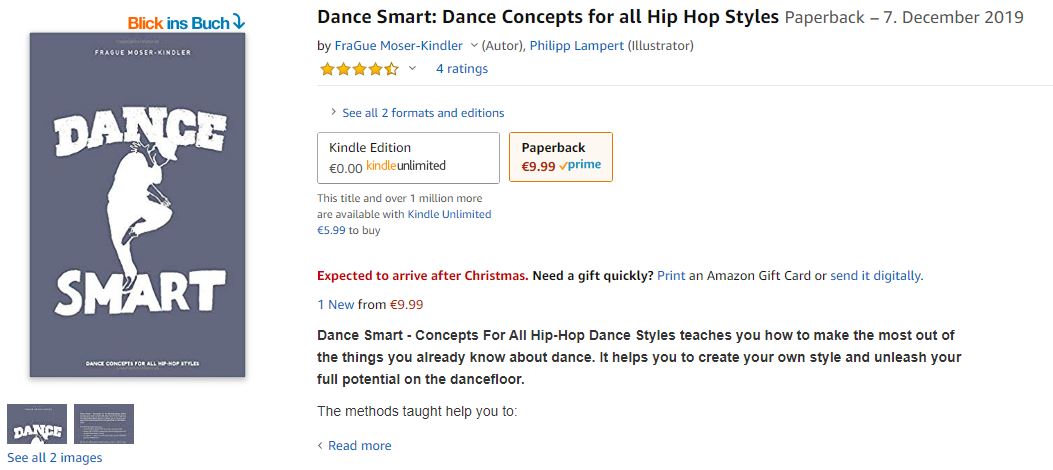
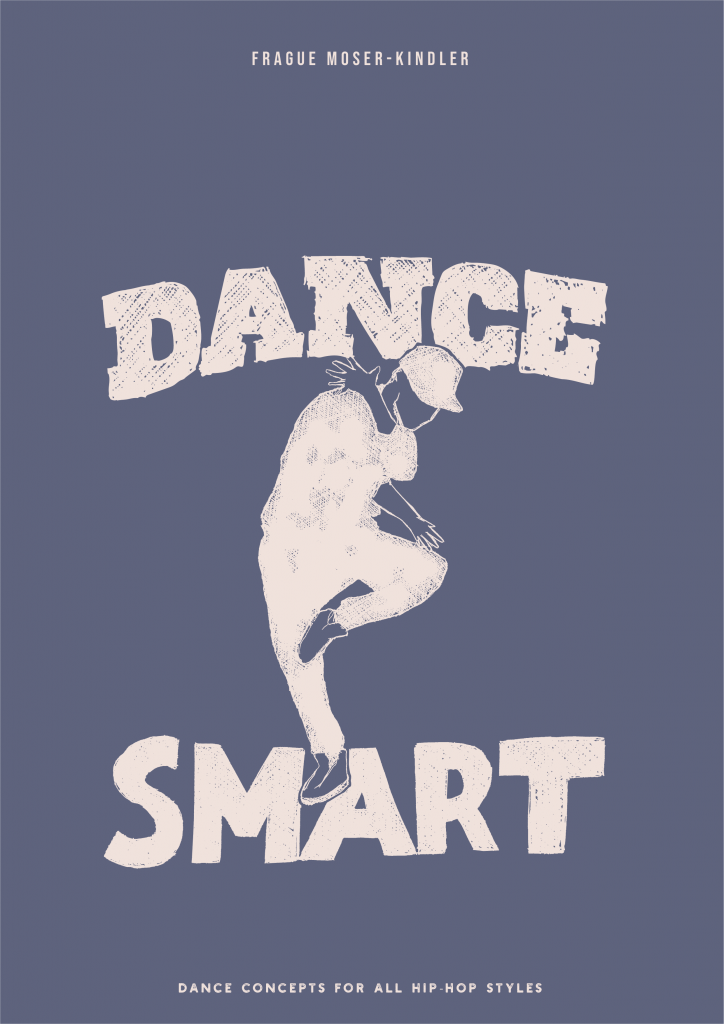
Finally “Dance Smart: Dance Concepts for all Hip-Hop Styles” is available. From Dec 23 to Dec 29, you can grab it at a discounted introductory price of 1 Euro for the ebook and 10 Euro for the paperback. Exact prices will vary due to your local VAT rate.

Here are some first reaction from early readers:
A very well written ragbag of how to improve your dancing! For me a dancer’s must-read!
Stuggi
Very useful tool-kit for everybody who wants to level up their dance!
Vanny
I also received very valuable feedback on how to improve my writing and presentation of the concepts, that will, for sure, find its way into an updated version later down the road.
Thanks everyone for the support.
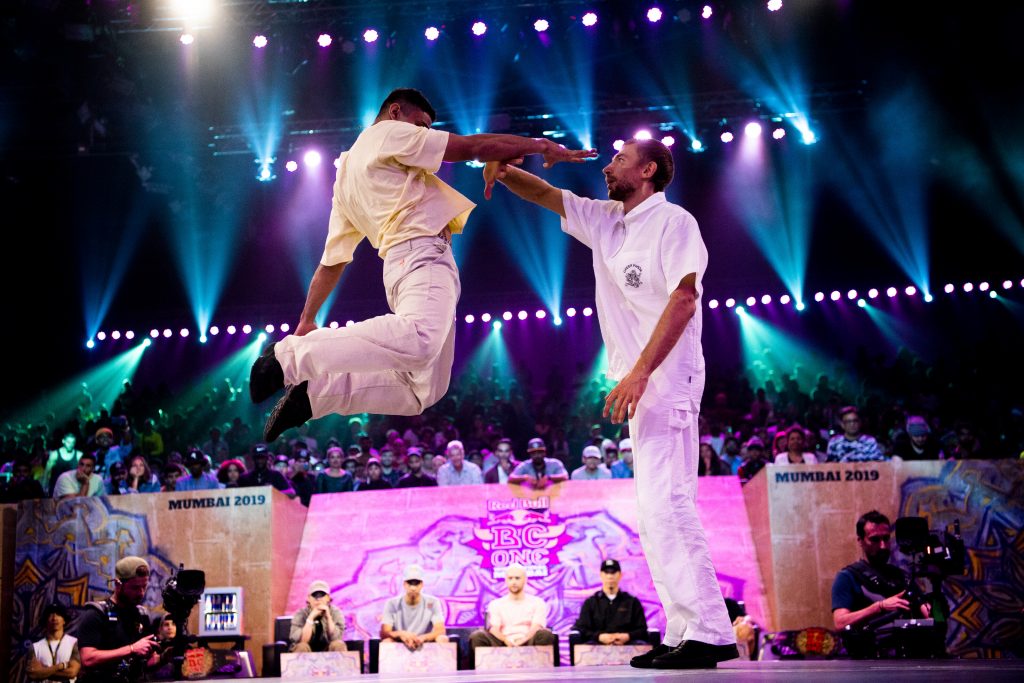
Yesterday I came back home from the Red Bull BC One World Final 2019, which went down in Mumbai/India. The trip was an outstanding experience, and I want to share some of my experiences here. As Manny and I already covered the event itself as part of our work, I will not talk about everything that happened there. You can find the links to those stories below:

I want to share my experiences with the Indian dance scene and the culture instead. Here is what stood out at my time in Mumbai:
All in all, this trip was an outstanding experience, and I learned a lot about life and dance in these few days. Also, the energy of the dancers from India refueled my desire to get back into dancing.
All that’s left to say is: Thank you so much for the beautiful experience and the outstanding trip. ābhārī hōṅ
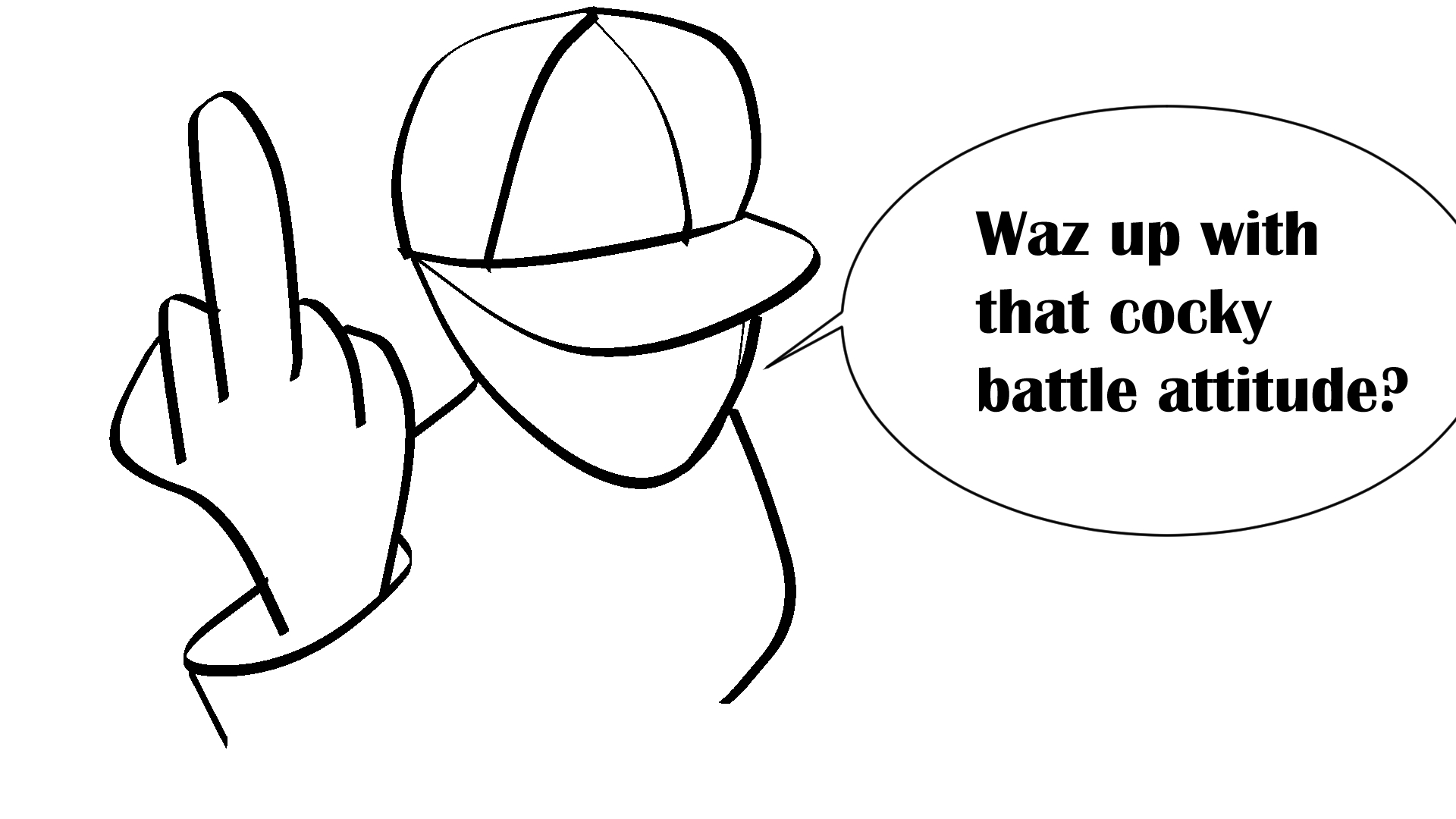
Let’s talk about attitude, more specific the attitude people bring to competitions. For the sake of my post I will refer to battle attitude as the character and manners that we display in the battle when interacting with our opponent.
Everyone has his own battle attitude, that is defined by who he or she is as a human. It’s built from experiences and how we approach the dance. So far so great. But there is one thing that really bothers me: the cocky battle attitude. It’s still the prevalent way most people go into battles. And it does not make any sense, that it is this way.
Being cocky and aggro towards your opponent is fine when you have beef. That’s as far as I know the reason where this attitude comes from. But we don’t have beef with most people we battle, do we?
A lot of people think, or are maybe thaught, that this attitude is a part of the game and they take it and put it into their dance without thinking about it. I want to challenge this fact and tell you that there are actually more reasons to avoid that attitude, than to use it.
But hey, let’s take it the other way around. There is one very specific case where it makes sense to act cocky and maybe even to be an asshole towards your opponent. This is when you and your opponent are on the same level and you have a chance to mess with his head so that he cannot perform at his best.
Now some points against it:
I am sure everyone can see the pattern above. If it is not part of the strategy that makes you win the battle, it works against you, every time. And while judges try to be objective and not consider things like this most of the time, the subconsciousness still factors sympathy in.
My suggestion: be confident with your skills and beat them with a smile.
What’s your take on this? Did I miss something crucial? Pop me a comment if you think so.
Hip Hop is a culture that lives and thrives through the activities of its members. So far so cool. When we talk about supporting the scene or culture most people think about big things like throwing a jam, founding a crew, organising parties, teaching classes and so on. Not exactly things that everyone is going to do, because of to little time, knowledge, money or other reasons.
What I want to talk about today are three easy ways that everyone can utilise to support and keep the momentum for everyone going. Things that most people don’t think about when talking about community backing.
While a lot of people think about organising jams or teaching as a way of support, there is another side to it as well. Being at the events or in the class is also a kind of support? How so, you ask? Given that you pay for your entry or for being in the class you support the promoters or the teacher and therefore enable them to invest their time in doing what they do. This helps the scene grow. Same goes if someone has a gig.
On the other hand: If you could afford to buy a ticket but try to get on the guest list every time, you actually decide not to fully back the guys that are doing their thing.
Often overlooked but it goes a long way. Tell people about what is happening. Do it in person if you meet someone who might be interested. Hit that like and share buttons on social media. It costs you nothing but a click but potentially shows the event to dozens of interested people, sometimes hundreds or even thousands.
If only one of the newly reached guys comes, it was worth it.
This is not only true for food. Hip Hop has many small clothing labels, independent DJs, music producers and more creative peeps that create stuff. Buying their clothes, albums or whatever they are creating instead of the shirt at H&M or listening to their music only via Youtube, once again enables them to keep going.
Here you have it, three easy ways to support your community that do not require extraordinary amounts of time, skills or dedication.
If you can think about more of them, let me know in the comments.